
Profile – Seyyed Mojtaba Khamenei: The Complete Story of Iran’s new supreme leader
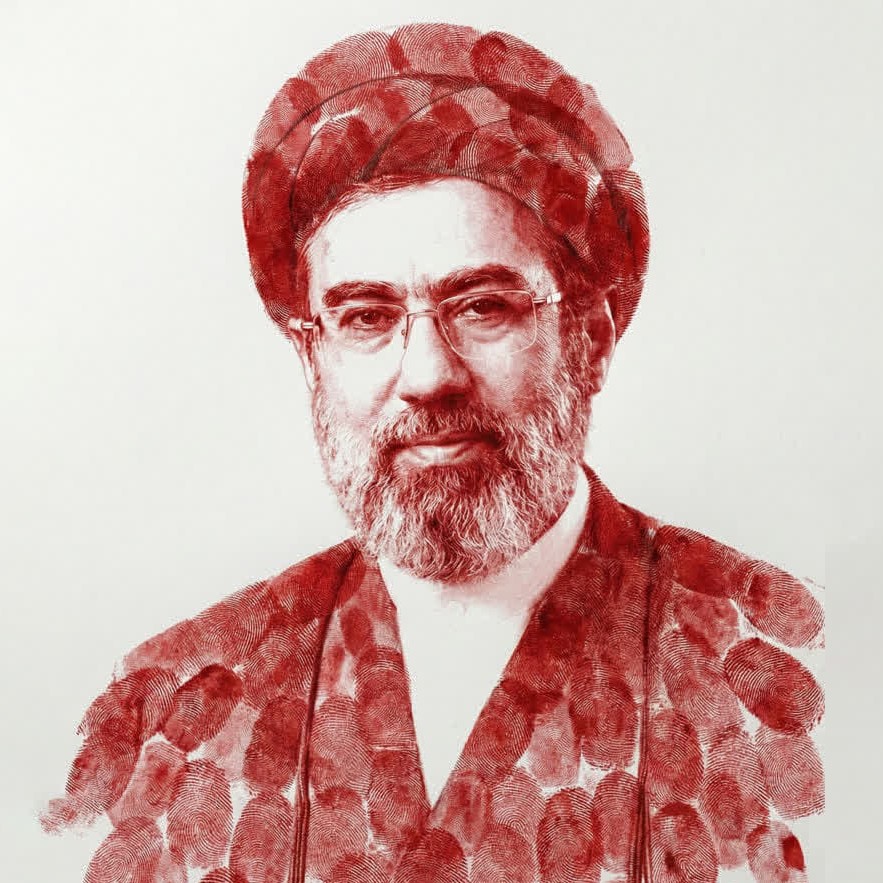
Author: Ahmadreza Moradi- Ali Barzegar
Introduction | Profile – Seyyed Mojtaba Khamenei: The Complete Story of Iran’s Third Supreme Leader
“I wish for a mouth as vast as the heavens, that I might describe the one who is the envy of the angels!”
Ayatollah Seyyed Mojtaba Hosseini Khamenei, the second son of the Leader of the Islamic Republic of Iran, Martyr Ayatollah Seyyed Ali Hosseini Khamenei, was born in 1969 in the holy city of Mashhad. He was raised within a family deeply rooted in Islamic jurisprudence, religious authority, and socio-political engagement—a lineage that, generation after generation, has dedicated itself to the promotion of Islamic scholarship while standing against colonialism and global arrogance. Today, he is recognized among the distinguished instructors of advanced Kharij courses in Islamic jurisprudence (Fiqh) and legal theory (Usul al-Fiqh) at the Qom Seminary.
His unwavering commitment to preserving the scholarly traditions of the Hawza, his meticulous examination of complex jurisprudential texts, and his dedication to educating a new generation of thoughtful young scholars all reflect the depth of his mastery in Islamic jurisprudence. His academic approach has established a meaningful connection between the classical Jawahiri school of jurisprudence and a precise understanding of contemporary systems of governance, enabling him to address the increasingly complex needs of modern Islamic society and the emerging jurisprudential challenges of our time.
Beyond his profound scholarly qualifications, Ayatollah Seyyed Mojtaba Khamenei possesses exceptional analytical acumen and a comprehensive understanding of major political affairs, qualities that have shaped him into a remarkably well-rounded figure. His personal conduct has consistently been characterized by a deliberate avoidance of media attention, a clear distance from public self-promotion, and an unwavering focus on quiet yet effective service.
This composed and dignified manner, coupled with firmness in decision-making and a deep appreciation of the demands of the age, has established the credibility and influence of his words among the country’s academic and strategic elites—much as it did for his father.
For further reading: Understanding the Character of Martyr Seyyed Ali Khamenei | A Builder of Civilization and a Guardian of Wilayah “the doctrine of Wilayat al-Faqih, the system of governance based on clerical guardianship”
Who is Mojtaba Khamenei? | The Leader’s Circle of Trust
Many readers may find it noteworthy that, over the past years, Agha Mojtaba served as the military adviser to the Leader of the Islamic Revolution. Whenever senior military commanders needed to deliver a confidential message or report to the Leader, or receive his response, this communication was often conducted through Agha Mojtaba. In practice, for many years he served as a trusted and reliable aide to the Leader, forming a secure channel through which assessments, proposals, and strategic analyses were conveyed.
Likewise, scholars and experts from a wide range of academic fields who wished to present their ideas, projects, or recommendations to the Leader frequently relied on the same channel to ensure that their work reached him.
(An Excerpt from a Speech by Hojjat al-Islam Raji)
From this perspective, it is important to recognize that such a position naturally entails a profound practical understanding of the mechanisms of leadership and the administration of major state affairs. His many years of close association with the Leader of the Islamic Revolution, together with his role in conveying analyses, viewpoints, and proposals, gradually provided him with an exceptional body of practical knowledge and experience in this field.
For that reason, it would be inaccurate to regard him as someone lacking experience in leadership or unfamiliar with the intricate dynamics of power and politics. Rather, for many years he has walked the very path that his father traveled before him, standing alongside him in numerous matters and assisting him in carrying out his responsibilities.
This close companionship created an opportunity for him to become familiar firsthand with the challenges of decision-making at a level where responsibility is not limited merely to the affairs of a single country, but is intertwined with the destiny of Muslims, the Shia community, and the oppressed peoples of the world. Standing in the position of the Deputy of the Guardian of the Islamic Jurist (Na’ib al-Wali al-Amr) requires more than mere experience; deep insight is also essential in order to recognize the enemy in its various forms, because the face of oppression has repeatedly changed throughout history and has appeared in new and different forms.
History has also demonstrated that many individuals have failed precisely in this test of insight; people who were unable to recognize the truth at critical moments, lost their way, and at times went so far as to sell their homeland and faith for a small price, distancing themselves from the path of righteousness.
It is striking that a different image of him is portrayed in the virtual space, where certain currents have attempted to construct a distorted representation of his character. This is while anyone who reflects even briefly on his life and personal conduct can clearly recognize that he is a figure who has consistently avoided publicity and fame.
Imagine a person who grew up in a family where his father had led a major country for more than three decades, yet he himself has avoided public exposure to such an extent that even finding a clear and high-quality photograph of him through Google is not an easy task. This level of distance from fame is undoubtedly a sign of sincerity and avoidance of self-display.
Today, in this country, there is a Wali al-Faqih named Seyyed Mojtaba, whose family members have experienced the hardships and sacrifices of the path of struggle and resistance. His father has been martyred, his mother has been martyred, and even his wife has been martyred. He himself has also been wounded as a veteran on two occasions: once during the current Ramadan War in the year 1404 (2025), and once during the years of the Sacred Defense.
Such a record undoubtedly reflects his deep connection with the real arenas of struggle against oppression and global arrogance. It has been only ten days since the martyrdom of his loved ones, and yet he accepted this great responsibility as Leader after being urged to do so. The judgment belongs to the people: Is he seeking power, or is he taking a step on the path of God and in defense of the rights of these people and the Revolution?
Examining Family Origins: The Upbringing That Shaped Seyyed Mojtaba’s Character
The origins of his paternal family trace back to the Tafresh region, with his ancestors belonging to the Husseyni Sayyids. His paternal grandfather, Ayatollah Seyyed Javad Khamenei, was a prominent and ascetic scholar from Tabriz and Mashhad. After completing advanced Islamic studies at the Najaf Seminary, Seyyed Javad settled in Mashhad. For the remainder of his life, he served as a trusted teacher and scholar, acting as a spiritual and jurisprudential refuge for the local community.
His great-grandfather, Seyyed Mohammad Hosseini Tafreshi, belonged to the lineage of the Aftasi Sayyids. His family tree reaches Sultan Seyyed Ahmad, a fifth-generation descendant of Ali ibn Husayn, known as Imam Sajjad. His grandfather, Seyyed Hossein Khamenei, was born in Khamaneh and later joined the Najaf Seminary, where he became a distinguished jurist, an instructor, and a scholarly advocate for Iran’s Constitutional Revolution. Ali Khamenei’s father, Seyyed Javad Khamenei, was a leading scholar and mujtahid of his era, holding permissions of ijtihad from renowned figures such as Mohammad-Hossein Naini, Seyyed Abu al-Hasan Esfahani, and Aqa Zia’ al-Din Iraqi.
It has been 109 years since the Constitutional Revolution, yet fresh perspectives on it continue to emerge—much like the French re-evaluating their own revolution on its bicentennial. Through this historical upheaval, Iranian society experienced profound transformations. These included the establishment of the National Consultative Assembly, the drafting of a constitution, the integration of the press into daily life, the rise of political parties, the institutionalization of modernization within the state, and the emergence of women’s issues.
The Iranian Constitutional Revolution represents a collective struggle and a series of momentous events spanning the reigns of Mozaffar ad-Din Shah Qajar and his successor, Mohammad Ali Shah. It was a monumental effort to overthrow absolute despotism in favor of a constitutional government, ultimately culminating in the formation of the parliament and the ratification of Iran’s first constitution.
For further reading: What is the Discourse of Constitutionalism?
Moving beyond this historical context, Seyyed Hashem Najafi Mirdamadi—the maternal grandfather of Seyyed Ali Khamenei—was a prominent Quranic exegete and the Imam of the Goharshad Mosque. During the reign of Reza Shah, his courageous protests against the massacre of civilians in the Goharshad Mosque uprising led to his exile to Semnan. According to Ali Akbar Velayati in the Great Islamic Encyclopedia, Seyyed Ali Khamenei’s maternal lineage traces directly back to Imam Jafar al-Sadiq. Furthermore, as noted by Morad Veisi on Radio Farda, his maternal grandfather was born and raised in Najaf, completed his education at the revered Najaf Seminary, and hailed from the Mirdamadi Sayyids of Isfahan, specifically from Najafabad.
Relocating to Iran at approximately forty years of age, he settled in Mashhad, dedicating himself to preaching, scholarship, teaching, and writing. For many years, he led the congregation at the Goharshad Mosque, focusing profoundly on Quranic exegesis and authoring his commentary, Kholasat al-Bayan, during this period. His extraordinary courage in defying Reza Shah’s tyranny and his vocal, public condemnation of the brutal massacre during the historic Goharshad Mosque uprising ultimately led to his banishment to Semnan.
For further reading: What was the Goharshad Uprising?
The mother of Seyyed Mojtaba Khamenei—the third Leader of the Islamic Republic of Iran—is Mansoureh Khojasteh Bagherzadeh, a woman nurtured within a deeply religious, noble, and distinguished family in Khorasan. Through his maternal lineage, profound scholarly and jurisprudential roots are equally evident. Seyyed Mojtaba’s maternal grandfather, Ayatollah Seyyed Hashem Najafabadi Mirdamadi, stood as a celebrated Quranic exegete and an eminent jurist of his time.
This great scholar’s ancestry traces back to the illustrious Safavid-era philosopher and theologian, Mir Borhan al-Din Mohammad Baqer Astarabadi, universally renowned as Mir Damad. The convergence of these two immensely rich intellectual lineages from both parents cultivated an environment overflowing with spirituality and erudition for his early upbringing—a profound foundation rarely found in other families.
The educational approach of this pious woman was anchored in the steadfast pillars of virtue, a life of simplicity, and the deepening of authentic religious convictions. Amidst the turbulent epicenter of her husband’s struggles and formidable responsibilities, she consistently cultivated an atmosphere radiating spiritual tranquility. Her noble demeanor, exemplary humility, and resolute avoidance of conventional worldly ostentation presented her family with a living embodiment of spiritual detachment.
Furthermore, this wise woman’s piercing insight into the demands of the era, coupled with her patient accompaniment through the arduous crucible of historical events, provided an unparalleled foundation for nurturing the minds and souls of children such as Ayatollah Seyyed Mojtaba Khamenei. The sweet fruit of this upbringing was the shaping of refined, visionary figures, fully prepared to safeguard a monumental jurisprudential legacy and shoulder immense strategic missions. Truly, gifting such a child to society is an extraordinary feat!
The Family Circle: Siblings and Uncles
Within the family circle, he was raised alongside three brothers—Seyyed Mostafa, Seyyed Masoud, and Seyyed Meysam—and two sisters, Boshra and Hoda. The fact that all the brothers chose to pursue seminary studies and don the clerical attire underscores the profound impact of the family environment on their individual trajectories.
His older brother, Seyyed Mostafa, along with his younger brothers, Seyyed Masoud and Seyyed Meysam, have all completed the highest echelons of seminary education and are currently dedicated to research, scholarship, and teaching within the Islamic seminaries. This remarkable solidarity in their chosen academic path bears witness to the deeply rooted presence of authentic seminary discourse at the very core of this family.
The influence and impact of this family extend beyond its primary branch to include the brothers of the Leader of the Islamic Republic. Notably, Seyyed Mohammad Khamenei, Seyyed Mojtaba’s eldest uncle and Ayatollah Khamenei’s older brother, is a distinguished figure with an exceptional judicial and academic background. Having completed his studies in both Islamic jurisprudence and law, he held pivotal roles within the judicial system during the foundational years of the Islamic Revolution.
However, his enduring renown stems primarily from his profound dedication to Islamic philosophy, particularly Transcendent Theosophy (Hekmat-e Mota’aliyeh) and the doctrines of Mulla Sadra. His presidency over the Sadra Islamic Wisdom Foundation and his relentless efforts to promulgate and elucidate philosophical thought have firmly established him as a preeminent academic and researcher in this field.
Alongside him stands Seyyed Hassan Khamenei, Seyyed Mojtaba’s other uncle, who has largely dedicated his efforts to supervisory and executive responsibilities within institutions affiliated with the Leader’s Office and the cultural and media sectors. In contrast to his brothers, he has maintained a noticeably more reserved presence in the public and media spheres.
Contemplating this extraordinarily rich family heritage illuminates the secret behind the intellectual and managerial genesis of Ayatollah Seyyed Mojtaba Khamenei. Emerging from the heart of a lineage adorned with an unbroken jurisprudential tradition, political valor, philosophical wisdom, and macro-management experience has cultivated an unparalleled capacity within him for the monumental task of leadership in the Islamic Republic.
This colossal educational legacy, coupled with his direct comprehension and continuous presence at the absolute highest echelons of the nation’s scientific and decision-making apparatus, has ingrained within him a profound framework of sagacity, resilience, and depth of thought. Such an unrivaled foundation has thoroughly polished his acquired merits, readying him to guide, lead, and embrace the most daunting of missions. It has shaped him into a figure unequivocally prepared to fulfill macro-strategic roles at the most exalted levels, such as the position of supreme leadership.
From Birth to the Imposed War
Ayatollah Seyyed Mojtaba Hosseini Khamenei was born on September 8, 1969 (the 17th of Shahrivar, 1348 SH) in the city of Mashhad. His birthplace was a vibrant epicenter of religious and scholarly thought. He stepped into the world within a lineage whose very fabric was intimately woven with knowledge, jurisprudence, and spirituality. His birth coincided with a deeply turbulent era in contemporary Iranian history—transformative days when society was breathing amidst profound intellectual and social upheavals.
Through his father, his ancestry traces back to an unbroken succession of venerable scholars and eminent clerics from the Azerbaijan region and the holy city of Najaf. His noble family origins, detailed extensively earlier, endowed him with an invaluable legacy of piety and erudition. His forefathers consistently treaded the path of disseminating Islamic teachings while steadfastly confronting the arrogance and colonialism of oppressors. This illustrious heritage cast a profound, blessed shadow over the environment in which this newly born child would grow and flourish.
The paramount role of his mother, Lady Mansoureh Khojasteh, in cultivating moral virtues and laying the ideological foundation for her children is undeniable. Within a warm home radiating with maternal affection, pure Islamic teachings were imparted to the children’s minds and souls with sheer eloquence and boundless compassion, fundamentally shaping the very core of their character.
Seyyed Mojtaba’s early childhood was intertwined with the hardships and turbulence born of Mohammad Reza Pahlavi’s oppressive reign and the lethal SAVAK apparatus deployed against religious activists. The home in which he lived was repeatedly subjected to the sudden intrusions and abrupt raids of SAVAK agents. These bitter yet deeply instructive events sowed the seeds of courage and resilience in his subconscious. They painted a vivid picture of what it truly meant to stand unyielding for one’s beliefs in the face of tyranny and colonialism.
Upon reaching school age, he embarked on the path of seeking knowledge, commencing his primary education in the schools of Mashhad. His innate brilliance and exceptional intellect swiftly distinguished him among the most diligent and accomplished students. An insatiable thirst for reading and a profound curiosity to comprehend his surroundings were evident in his demeanor from his earliest school years, earning him the deep admiration of his teachers.
Running parallel to his formal education, his spiritual upbringing and deep immersion in classical Islamic texts remained a cornerstone of the family’s priorities. Active participation in religious congregations, the recitation of the Holy Quran, and a profound intimacy with sacred supplications continuously polished his soul. The seamless convergence of his academic vigor and his discipleship within the school of the Ahl al-Bayt structured his intellectual geometry with an exemplary and masterful balance.
His adolescent years were marked by his father’s repeated exiles and incarcerations. The absence of a fatherly figure—the unifying anchor of the family—placed a formidable psychological burden on them all. However, guided by the patient and visionary presence of his mother, these adversities forged his will into steel. Enduring those fraught, anxiety-ridden days of separation taught him practical lessons in patience and unwavering reliance on God through his mother’s profound teachings. This crucible elevated him to a state of intellectual and spiritual maturity long before he reached the chronological age of adulthood.
The crescendo of the people’s revolutionary uprising in 1979 stood as a defining watershed in contemporary history and, inevitably, in the life of this young man from Mashhad. Witnessing the roaring waves of the masses and hearing the resounding chants erupting from the depths of the people’s souls—demanding a life of liberty—left an indelible imprint on his worldview. Grasping the visceral reality of national solidarity and the triumph of the collective will over oppressive, colonial powers was an invaluable experience, permanently etched into his consciousness.
Following the establishment of the Islamic Republic of Iran, the family was compelled to leave their hometown and migrate to the capital, driven by the profound and weighty responsibilities resting on his father’s shoulders. To grasp the historical gravity of that era, his father’s critical roles—both previously held and forthcoming at the time—included:
Member of the Council of the Islamic Revolution (1979)
Deputy Minister of Defense in the Interim Government (1979)
Acting Commander of the Islamic Revolutionary Guard Corps (IRGC) for a brief period at the dawn of the revolution
Friday Prayer Imam of Tehran (from 1979)
Representative of the people of Tehran in the Islamic Consultative Assembly, First Term (1980–1981)
Representative of Imam Khomeini in the Supreme Defense Council during the Iran-Iraq War
Representative of Imam Khomeini in the IRGC
Secretary-General of the Islamic Republican Party following the martyrdom of Ayatollah Beheshti (1981)
President of the Islamic Republic of Iran (two terms: 1981 to 1989)
This momentous relocation opened vast new horizons before him. Transitioning into a much larger environment and a new school in Tehran demanded a high degree of adaptability—a challenge he met with resounding success, continuing his academic pursuits with unwavering resolve.
His high school years in Tehran represented a vibrant new chapter in the blossoming of his intellectual talents. His intense focus on foundational subjects and his stellar academic achievements stood as a testament to his sheer determination on the path of scholarship. Peers and educators alike recognized him as a composed, deeply thoughtful young man who steered entirely clear of superficial distractions, channeling every ounce of his energy into elevating his knowledge and broadening his insight.
Meanwhile, the profound magnetism of seminary sciences and a fervent yearning for a deeper comprehension of religion drew him toward mastering the preliminaries of Islamic studies. Harmonizing his high school education with the rigorous study of classical seminary texts cultivated a comprehensive constellation of knowledge within his mind. This profound inner calling served as the prelude to his earnest entry into the exalted realms of ijtihad and jurisprudence in the years to come.
The onset of the Ba’athist regime’s military invasion across the nation’s borders plunged the societal atmosphere into an aura of heroic defense. Hearing the dispatches from the frontlines and witnessing the deployment of zealous young men to the operational theaters awakened a fierce warrior spirit within him. His older brother had already pioneered this path, a fact that redoubled his own burning desire to join the ranks of the homeland’s defenders.
Ultimately, in 1986, as he experienced the seventeenth spring of his life, he answered the clarion call of duty. Temporarily forsaking his academic seat and paying no heed to his exalted family status, he departed for the frontlines of the battle of truth against falsehood as a volunteer combatant. Joining the Habib ibn Mazaher Battalion of the 27th Mohammad Rasulullah Division served as an elegant conclusion to his childhood and adolescence, marking the genesis of his heroic legacy in the annals of this nation’s resistance.
The Iran-Iraq War
With the outbreak of the Ba’athist regime’s military invasion in the waning days of summer 1980, the very core of his family was immediately impacted by the realities of the frontlines. During the inaugural months of the conflict, as his father departed for the southern and western operational theaters to orchestrate irregular forces, household responsibilities were fundamentally redefined in his absence. It was here that the teenage Seyyed Mojtaba witnessed crisis management at the highest echelons firsthand.
The early years of the war catalyzed a period of profound intellectual and emotional maturation, unfolding within a crucible of heroism and self-sacrifice displayed by his compatriots. Witnessing the deployment of the nation’s youth to the battlefronts, attending the solemn funerals of pure martyrs, and absorbing the stirring, impassioned narratives of the combatants deeply moved his sensitive soul. These visceral experiences crystallized the ideal of defending the sanctity of faith and homeland, forging it into a deep-rooted, unshakeable conviction within his mind.
The failed assassination attempt against his father at the Abu Dhar Mosque in the summer of 1981 was a harrowing ordeal, confronting him with his father’s grave injuries and an arduous period of convalescence. As previously noted, following his father’s ascension to the presidency later that year, the family’s residence and lifestyle were fundamentally altered to comply with strict security protocols.
Throughout this era, despite stringent protective restrictions, he resolutely maintained his connections with religious and scholarly circles. Parallel to his formal education, he prioritized the mastery of the Arabic and English languages alongside the meticulous study of sacred texts. It is noteworthy to mention that he remains highly fluent in both English and Arabic to this day.
In the early 1980s, while immersed in his studies at Tehran’s Alavi School, he bore witness to a series of horrific terrorist atrocities, most notably the devastating bombing of the Islamic Republican Party headquarters. A burning fervor to join the battlefield had stripped him of all tranquility. Though his youth stood as a formidable barrier, he counted down the moments, yearning for the opportune moment to stand shoulder to shoulder with the Mujahideen.
In the interim, he pursued his academic duties with profound diligence; yet, his heart relentlessly beat for the trenches of the nation’s southern and western frontiers. His mind remained wholly captivated by the fate of a generation that was penning the epic of its devotion with its own blood.
As mentioned earlier, in 1986, while navigating the seventeenth spring of his life, he was finally granted permission to deploy to the frontlines. Refusing to rest upon the laurels of his exalted family status, he—like thousands of other impassioned youths—donned the humble khaki uniform of the Basij. Stepping forward as an anonymous soldier, he wholeheartedly took up the sacred mantle of jihad.
The 27th Mohammad Rasulullah Division stands as a strategic and pivotal unit in the annals of the Holy Defense era. Its core foundation was forged through the sagacity and unyielding perseverance of Haj Ahmad Motevaselian, alongside a cadre of elite combatants from the capital. Commanded by distinguished and visionary figures such as Mohammad-Ebrahim Hemmat, Abbas Karimi, and Reza Dastvareh, this division operated as a formidable, line-breaking force in decisive and fateful operations, including Fath ol-Mobin, Beit ol-Moghaddas, Valfajr 10, and Kheibar.
The ranks of this unit—encompassing university students, dedicated professionals, and everyday citizens—were the ultimate embodiment of profound faith seamlessly interwoven with military prowess. Their strict operational discipline, coupled with countless acts of self-sacrifice, elevated this division into an enduring symbol of resilience and martial genius. The immense prestige of this division remains anchored in the warrior spirit of soldiers who, under the most grueling combat conditions, altered the very course of history through their relentless struggles, leaving behind an immortal legacy of valor and tactical brilliance.
Serving as an infantryman within this battalion alongside his fellow Basijis, he participated in numerous offensives, most notably the massive Operation Karbala 5 in the Shalamcheh region, where he amassed arduous field experience amidst a crucible of fire and blood. His time on the frontlines served as a profound opportunity to polish his soul and fortify his resolve.
He tasted the bitter and sweet realities of resistance, enduring both the bone-chilling cold of the western highlands and the blistering, unrelenting heat of the southern plains. Companionship with devoted warriors and witnessing the martyrdom of his comrades intimately acquainted him with the profound concepts of mortality and eternal life, broadening his horizons toward far deeper spiritual truths.
Throughout his deployment, he commuted between the frontlines and the rear on several occasions to ensure his classical education remained entirely uninterrupted. Nevertheless, his active presence in the operational zones of Shakh Shemiran and Mawat—participating in pivotal offensives such as Operation Mersad and Operations Beit ol-Moghaddas 2, 3, and 4—constituted a defining chapter of his life between the years 1987 and 1988.
Nour-Ali Shoushtari, a prominent Iranian military commander, recounted his battlefield presence with the following words:
“…He appeared on the battlefield on numerous occasions, participating in various operations. For instance, one night during Operation Beit ol-Moghaddas 3, we suddenly saw Seyyed Mojtaba arrive. But while I was preoccupied talking on the radio and managing other tasks, he simply set off toward the frontline. Try as I might, I could not hold him back. I immediately contacted his division commander and warned: ‘They are heading your way; make absolutely sure they don’t participate in the initial line-breaking.
‘ The following day, when I inspected the area, I saw them actively operating on the Qashan heights—stationed at the very vanguard of the defensive perimeter, in a severely treacherous location where evacuating the wounded and resupplying ammunition and rations was agonizingly difficult.”
The End of the War and Return to Studies
Following the acceptance of Resolution 598, the establishment of a ceasefire in the summer of 1988, and his return to the embrace of his family, he was no longer the teenager of the past. His resolute countenance and piercing gaze reflected the profound maturity of a man who had emerged triumphant from the crucible of adversity. Such an invaluable experience laid the absolute bedrock of his future character and permanently altered the trajectory of his life. In the aftermath of the war, his paramount priority was the completion of his secondary education.
With unwavering resolve, he returned to his classes and studies, successfully earning his high school diploma in the experimental sciences. This period served as a vital time for deep reflection on past lessons and the formulation of a clear, visionary path for his academic and spiritual future.
In June 1989, marked by the tragic passing of the Imam of the Ummah and the subsequent election of his father to the exalted position of Supreme Leader, the family’s spiritual and social responsibilities were magnified a hundredfold. This moment constituted a monumental turning point, completely transforming his social obligations and the circumstances defining his everyday life. Throughout the massive funeral processions and the ensuing period of national mourning, he stood steadfastly alongside his family, assuming the heavy duty of hosting grieving delegations and international dignitaries.
Despite having the opportunity to pursue higher education at the nation’s most prestigious universities, he consciously chose the path of the seminary and the study of religious sciences—the very same path walked by his noble ancestors. This profound choice was indicative of a deep-seated love for Islamic teachings and an immense, burning passion to accurately comprehend the foundational principles of jurisprudence (Fiqh) and Islamic law. In the early 1990s, he actualized his definitive decision to formally join the ranks of the clergy.
Commencing his seminary studies at the Ayatollah Mojtahedi Tehrani Seminary marked a highly serious step toward mastering religious sciences. This scholarly journey was accompanied by learning at the feet of masterful scholars and swiftly navigating the preliminary levels of seminary education.
His academic tenure in Tehran was defined by an intense focus on authentic jurisprudential texts and classical Arabic literature. During this critical phase, in addition to his rigorous seminary coursework, he actively participated in all the high-level gatherings and sessions held at the Leader’s Office. This deliberate engagement was aimed at profoundly deepening his political acumen and broadening his religious insight.
Marriage and Academic Migration to Qom
The year 1999 coincided with two momentous events in his personal and academic life. In this year, his marriage to the daughter of Dr. Gholam-Ali Haddad-Adel was solemnized—a ceremony conducted with the utmost simplicity in the presence of a gathering of esteemed scholars, which garnered significant attention in news circles.
Concurrently with the formation of his family, he embarked on an academic migration to the holy city of Qom. Taking up residence in Qom and entering its illustrious Islamic seminary afforded him the opportunity to delve into research and inquiry at the highest seminary levels, thoroughly benefiting from the city’s deeply intellectual and highly competitive academic atmosphere.
At the Qom Seminary, he meticulously completed the advanced levels under the tutelage of distinguished professors. Subsequently, to attain the exalted degree of ijtihad, he attended the advanced Kharij classes on jurisprudence and its foundational principles (Usul) taught by eminent figures such as Ayatollah Seyyed Mahmoud Hashemi Shahroudi, Ayatollah Javadi Amoli, and Ayatollah Mesbah Yazdi, dedicating years as their devoted disciple. Benefiting from the profound wisdom of such grandmasters had an immense impact on shaping his own jurisprudential methodology and intimately familiarized him with modern approaches to Islamic law.
Following years of rigorous study and research, he reached a zenith of academic mastery that qualified him to teach the most advanced seminary courses himself. He initially began by instructing high-level texts, such as Rasa’il and Makasib, to younger seminary students. Thanks to his eloquent delivery, impenetrable reasoning, and absolute mastery over the subject matter, his classes were swiftly met with overwhelming enthusiasm and widespread acclaim.
Attaining the Rank of Mastery and Ijtihad
The zenith of his scholarly development manifested when he began teaching Kharij jurisprudence. The Kharij chair represents the absolute highest echelon of education within the Islamic seminaries. Holding this prestigious position signifies the attainment of the faculty of ijtihad and the profound ability to deduce Islamic laws from the Quran, the Sunnah (prophetic tradition), intellect, and consensus. The steady presence of brilliant scholars and gifted students in his academic circles served as a powerful testament to his exalted scholarly standing.
The topics debated in his Kharij classes were predominantly selected from the most pressing, contemporary issues required by Islamic society. Vital subjects such as jihad, Wilayat al-Faqih (Guardianship of the Islamic Jurist), and other crucial jurisprudential chapters were explored with deep, reasoned analysis. This rigorous approach clearly reflected his profound concern for the macro-level challenges facing the Islamic world.
Throughout all these years, one of his most defining character traits has been a strict avoidance of fame and a deliberate retreat from the public eye. Despite his exceptional position, he has consistently strived to lead a simple life devoid of formalities. He has actively defined his identity not merely as the son of the Leader, but as a dedicated clerical researcher and instructor.
His practical conduct in his personal life is drawn directly from the very model of simple living he learned from his father. A steadfast commitment to the modest lifestyle of a seminary student, unpretentious interactions, and a close bond with everyday citizens are among the qualities to which his inner circle and students have continually testified. This noble demeanor is deeply rooted in an authentic upbringing and an unshakable belief in asceticism and piety.
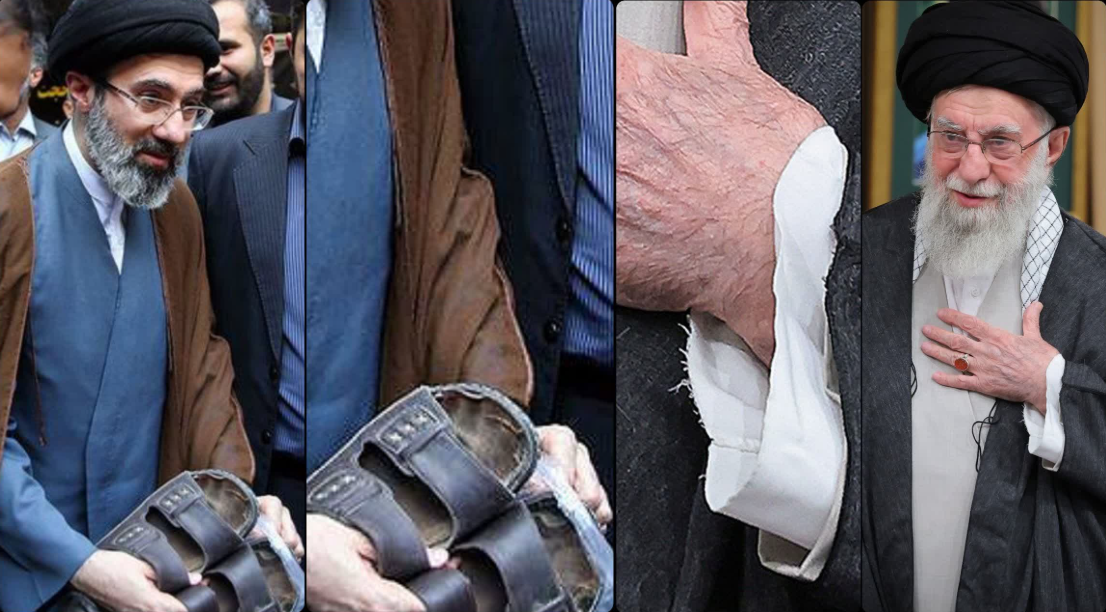
The birth of his first child, Mohammad Baqer, in the early 2000s (the early 1380s SH), inaugurated a new chapter in his family life. Alongside his paternal duties, he unfailingly attended and conducted his advanced Kharij classes with absolute punctuality. The subsequent births of his other children, Fatemeh and Mohammad Amin, brought even greater warmth to the family circle. Despite his immense scholarly commitments, he has consistently emphasized the profound religious upbringing of his children, deliberately steering their lives far clear of luxury and media spectacles.
The eruption of regional crises and the terrorist seditions orchestrated by the United States, Israel, and their allies in neighboring countries—tragically coupled with the martyrdom of his father, mother, wife, and compatriots—once again ignited his enduring jihadi spirit.
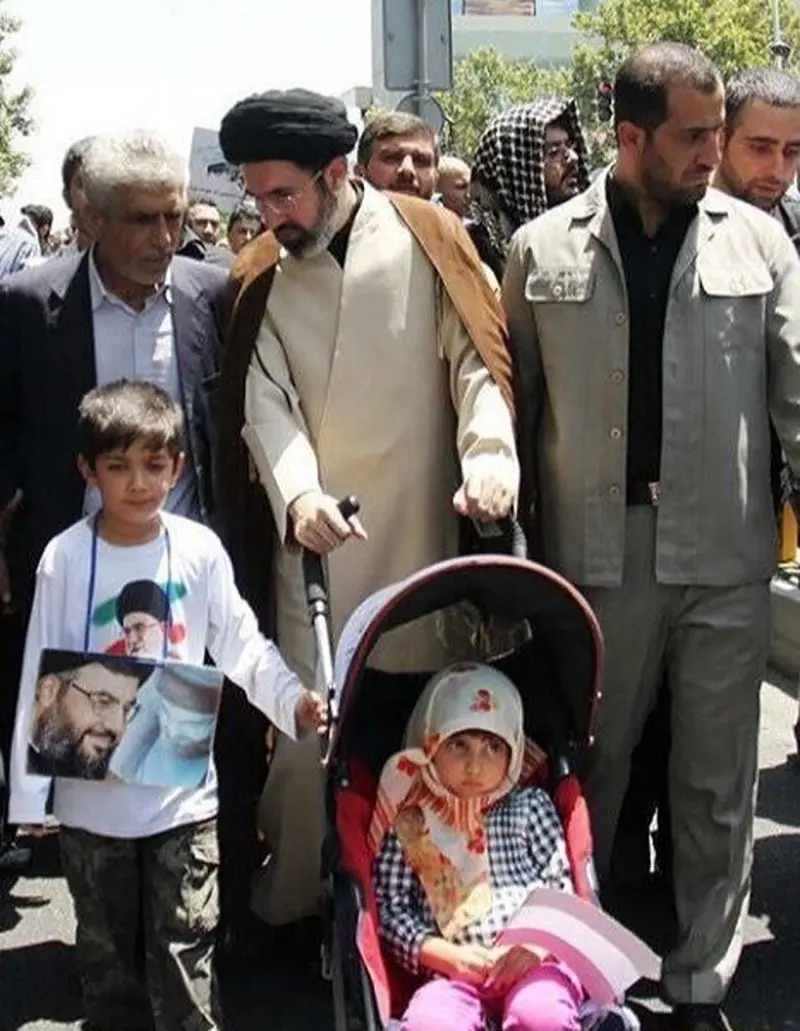
Although his physical deployment to the frontlines of the resistance was precluded due to highly sensitive considerations, his intellectual and spiritual backing of resistance movements constituted a vital, albeit concealed, dimension of his activities during this era. Entering the 2020s (the 1400s SH), his scholarly pursuits evolved to intensely focus on newly emerging (mustahdathah) issues in Islamic jurisprudence. The rigorous jurisprudential examination of contemporary topics in his Kharij classes served as a clear testament to the dynamism of his intellect and his acute attunement to the modern needs of both society and the Islamic system.
On February 28, 2026 (Esfand 9, 1404 SH), yet another targeted assassination unfolded. Simultaneous with the bombing of the Leader’s offices within the Beit-e Rahbari (Leader’s Office) complex in Tehran’s Pasteur district, the Zionist regime struck a nearby residential unit. During this brutal assault, the organizational residence of Seyyed Mojtaba Khamenei was hit by multiple missiles, resulting in the tragic martyrdom of his wife, Dr. Zahra Haddad-Adel. Providentially, their children survived the terrorist attack, having been away at school at the time.
In 2025 (1404 SH), he continued to be recognized as an authoritative and stylistically distinct instructor at the Qom Seminary. His daily endeavors were defined by an unwavering dedication to teaching and research, alongside safeguarding the sanctity of the Leader’s Office and accompanying his father in spiritual and advisory capacities. Today, in late 1404 SH, the trajectory of his life reflects an unbroken journey—from the battlefronts of his adolescence to the exalted chairs of jurisprudence in his middle age.
This path, entirely detached from political clamor, advanced with a steadfast focus on fortifying scholarly foundations and preserving the core values of the Islamic Revolution. Ultimately, this journey culminated in his election as the third Leader of the Islamic Republic of Iran by an overwhelming and decisive majority vote from the Assembly of Experts for Leadership. He is a figure whose life and legacy are so utterly unblemished that one would be hard-pressed to find even a single gray area in his record!
Alongside his scholarly pursuits, he continuously stood by his father as a trusted advisor and a dutiful son. An intimate familiarity with domestic and global political and cultural landscapes—an awareness that permeated their household from his earliest childhood—granted him profound insight and a comprehensive worldview, qualities vividly reflected in his strategic analyses and counsel.
His children, too, have been nurtured within this very paradigm of simple living and a devotion to learning, embarking on their own academic journeys. Raising a committed and virtuous generation has remained a perpetual priority for him, both as a father and an educator, ensuring that the spiritual legacy of their lineage remains enduring and brilliantly illuminated.
Epilogue | Profile – Seyyed Mojtaba Khamenei: The Complete Story of Iran’s Third Supreme Leader
The evolutionary trajectory of his life demonstrates an indissoluble bond between the arenas of combat and the exalted chairs of intellectual reasoning. He is a figure who rose from the dust of the battlefronts in his youth and navigated the profound, labyrinthine corridors of advanced Kharij jurisprudence and its principles to reach the lofty ranks of mastery and ijtihad. His current path narrates the genesis of an identity that has masterfully polished theoretical knowledge within the crucible of practical and strategic trials.
Beneath the surface of his rigorous academic endeavors runs a constant, powerful current of political and military acumen—the fruit of years spent intimately alongside the central hub of the establishment’s macro-level decision-making.
This continuous accompaniment of the Leader of the Revolution has endowed him with accumulated experience and piercing insight, elevating his comprehension of power dynamics and international challenges far beyond the confines of classical texts. His deliberate retreat from media clamor and his steadfast focus on fortifying scholarly and advisory foundations have forged a character who perceives power strictly as a divine trust, meant solely for safeguarding the core values of the Islamic Revolution.
The Third Leader of the Islamic Revolution | The Convergence of Jurisprudence, Insight, and Jihadi Valor
At this critical juncture—following the transgressions of the Zionist regime and the United States at the deceitful nuclear negotiation table, and pursuant to the decisive resolution of the Assembly of Experts for Leadership—a new chapter has opened in the history of the Islamic Republic of Iran. Taking into account all religious and legal dimensions, and with profound regard for his uniquely exceptional scholarly and managerial capabilities, the Assembly of Experts for Leadership elected Ayatollah Seyyed Mojtaba Hosseini Khamenei as the third Leader of the Islamic Revolution
. This election, born of the overwhelming majority vote of the nation’s experts, serves as the answer to the imperative of the era: ensuring the continuity of the path of Islam, which now stands completely arrayed against the front of disbelief.
Elucidating the Merits for the Echelon of Leadership
His qualifications for assuming this momentous responsibility rest upon several fundamental pillars, rendering him the most optimally suited choice to guide the Islamic Ummah:
Comprehensive Erudition: Attaining the faculty of ijtihad and dedicating years to teaching at the highest echelons of the seminary—coupled with a keen focus on newly emerging issues and the contemporary jurisprudential needs of society, fluency in English and Arabic, extensive comprehensive studies, and remaining abreast of modern scientific advancements required for the mantle of leadership—have transformed him into a forward-thinking jurist capable of steering the ship of the establishment through contemporary ideological and intellectual tempests.
Strategic Insight and Field Experience: His presence on the frontlines of the Holy Defense and enduring the wounds of a veteran, alongside years of serving as a trusted advisor in military and strategic affairs, have forged a figure with absolute command over the nation’s security and defensive chokepoints. This practical experience is the ultimate guarantor for preserving national authority and security in the face of foreign threats.
Moral Conduct and Ascetic Lifestyle: A practical commitment to asceticism and an aversion to worldly formalities, paired with his innate modesty and deliberate retreat from fame, have institutionalized his popularity among both the elites and the general masses. This demeanor evokes the conduct of the righteous leaders of early Islam and guarantees the enduring bond between the governance and the people.
Noble Lineage and Wilayi Upbringing: Growing up in a household that served as the cradle for nurturing jurists and mujahideen has heavily fortified his ideological roots. His unwavering accompaniment of his father through every peak and valley in the history of the Revolution has bestowed upon him a profound comprehension of the complexities of religious and political governance—a comprehension that remains utterly unparalleled.
Thus, bearing a radiant record of struggle and scholarship, Ayatollah Seyyed Mojtaba Khamenei now stands at the helm, the inheritor of the lofty ideals of great figures who sacrificed their lives for the exaltation of the Word of Allah. His leadership heralds an era of stability, intellectual dynamism, and unyielding resilience against the arrogance and colonialism of child-killing oppressors.
The Time for Allegiance!
The realm of passing judgment on history-making figures has always been clouded by the dust of ambiguity and the inherent complexities of interpreting their character. Nevertheless, arriving at a fair and equitable verdict demands a profound insight—one that examines an individual’s actions and existential impact through the mirror of their specific era and context. The deliberate denial of the documented truths within the track record of Ayatollah Seyyed Mojtaba Khamenei, coupled with a fixation on distorted, illusory flaws fabricated by malevolent minds, yields nothing but a grotesquely mutated portrait, entirely severed from reality.
The Zionist-sympathizing Pahlavists—who today, in an era of unprecedented clarity between the boundaries of truth and falsehood, continue to beat the drums of denial despite irrefutable evidence—have sought refuge in the trenches of the oppressive and colonialist ideologies of the United States, the Zionist regime, and their allies. In doing so, they are unequivocally striking the axe at the very roots of their own faith and homeland.
The persistent campaign of defamation and the sowing of seeds of doubt in the face of glaringly obvious documentation is less an indicator of a quest for truth, and more a testament to being held captive by the clutches of hostile prejudices—a mindset that has firmly bolted every window against objective re-examination.
To truly fathom the existential depth of this great figure, one must inevitably reflect upon the ideological foundations and the practical imperatives that have charted the course of his journey. Turning a blind eye to this colossal intellectual and practical heritage, only to cower in the shadows of baseless slander, merely provides a sprawling arena for the maneuvering of the sworn enemy—namely, the usurping Zionist regime and its mercenaries.
Therefore, let us step forward in this fateful crucible; by renewing our allegiance to our sagacious Leader, let us forge our ranks into an unbreakable line, permanently sealing the path against any form of hypocrisy and division.



دیدگاهتان را بنویسید